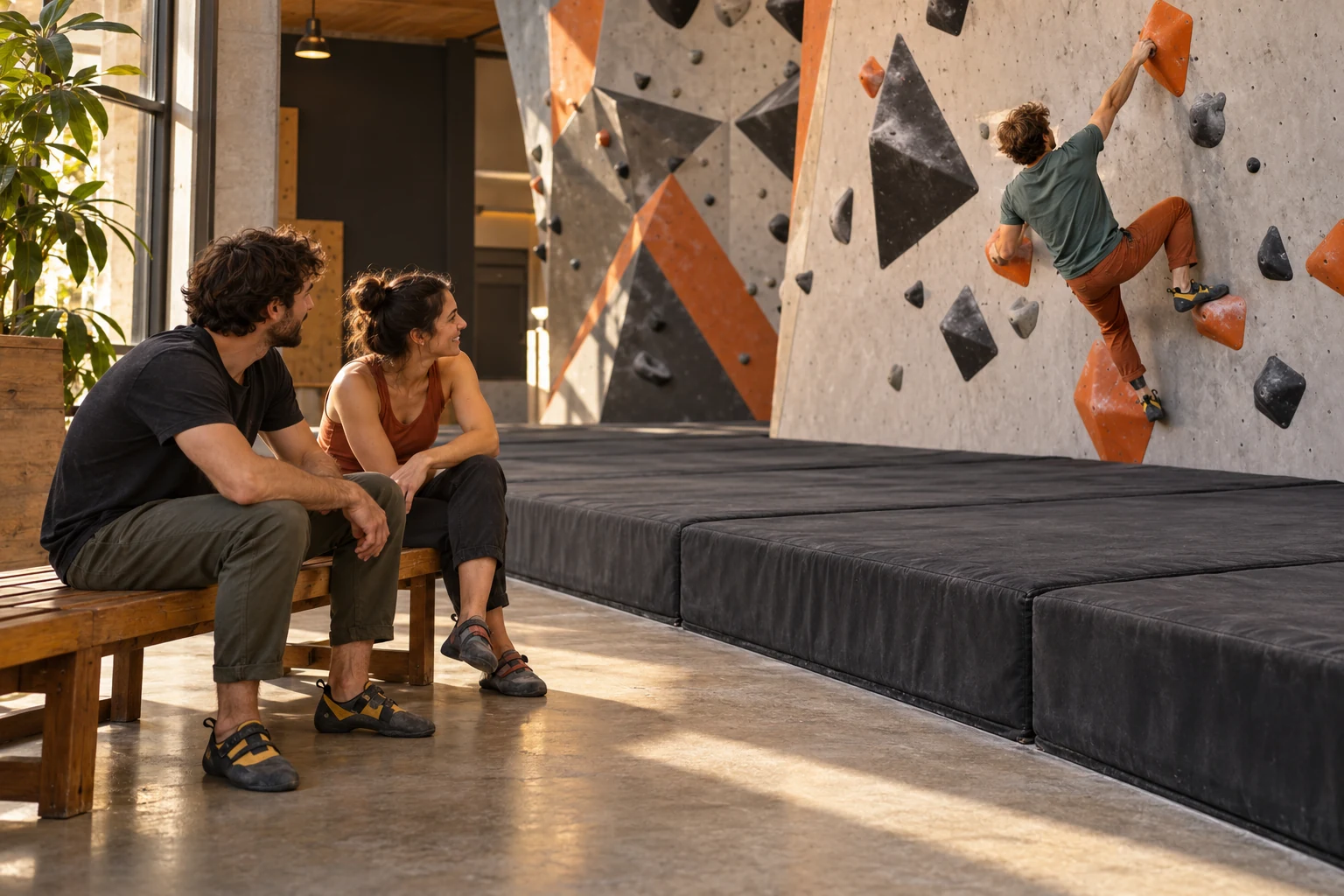
Attend the briefing → check the start, problem and finish markings → check other climbers’ paths → take turns → leave space for the next person after coming down.
Hold color and difficulty markings may mean different things.
A bouldering “problem” is a climbing task from a start to a finish. Some gyms use matching hold colors; others use tape to identify a problem. Follow the facility’s briefing to learn which handholds and footholds, wall edges and volumes you may use.
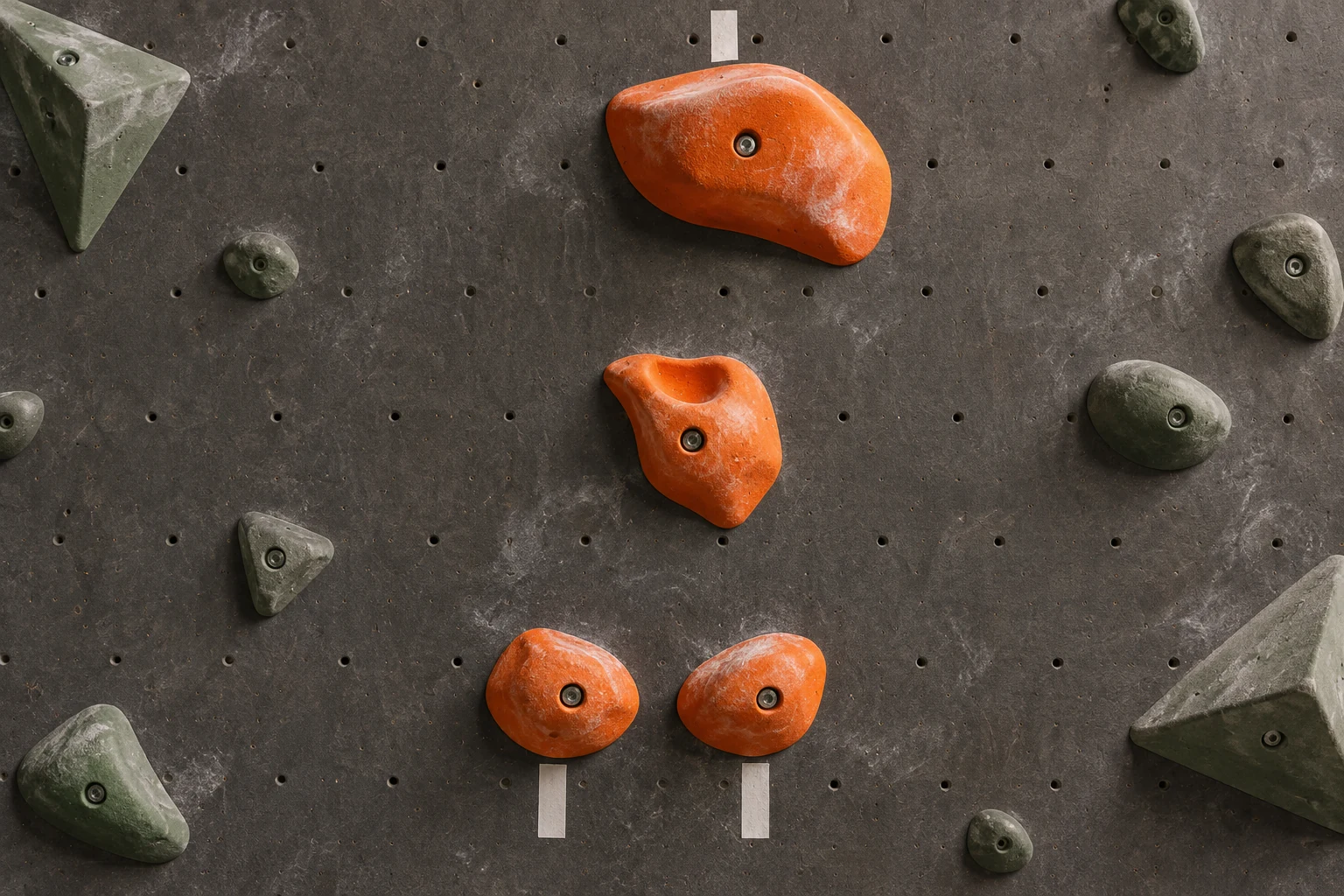
1. Start markingsCheck where to start.
2. Allowed holdsCheck the meaning of colors and tape.
3. Finish conditionsConfirm completion conditions at the gym.
- Find the start markings. Check which holds START labels or start tape identify, and what conditions apply at the start.
- Check which holds belong to the problem. Read the problem’s color or tape separately from the grade chart. Ask staff if you are unsure about small footholds or large volumes.
- Learn the finish and how to come down. Follow the local explanation of TOP and completion. Learn downclimbing and landing through first-use instruction.
Check for crossing paths, even on neighboring problems.
Separate starts can still lead through the same area or share landing space. If someone is already climbing, check their direction and where they may come down. Wait if paths overlap or you are unsure. Use the facility’s waiting areas and do not walk underneath climbers.
Keep mats and landing areas clear while resting or watching a video. Put bags, bottles and phones in the designated places too. If the order is unclear, ask “May I try next?” After each attempt, leave space for others, even when working on the same problem repeatedly.
Your orange problem approaches the neighboring blue problem halfway up. Different colors are not a reason to start together: wait for the other climber’s attempt to finish, then check the paths.
Offer beta when the other person wants it.
Finding your own solution is part of climbing’s appeal. Even if you see a move, ask “Would you like some beta?” before calling it out. If you want help, explain where you are stuck, such as “I’m not sure what comes after that hold.”
When encouraging someone, notice their response and other gym users, and adjust your volume to the setting. Focus on listening when staff need to give safety instructions.
Choose a filming position around people’s paths.
Check the gym’s filming and tripod rules first. Place the phone only where permitted, clear of mats, landing areas and walkways. If there is no suitable space for the shot, postpone filming from that position.
Check the wishes of people who may appear, and review surrounding faces and conversations before sharing. Ask separately before filming or publishing someone else’s climb. Finish recording settings before climbing, and do not enter a climber’s path to operate the device.
Phone framing and recording checks →Alongside the result, note one thing to check next time.
On your first day, make the problem recognizable rather than focusing on a high grade. Where permitted, note the area, hold color, local grade and date. If you have a video, check that the start and the movement of your hands and feet are visible.
Today: orange-hold problem in the introductory area; stopped before the finish.
Review: the point where I paused before moving my right foot.
Next question: ask staff which footholds belong to this problem.
This is an example, not an actual user’s record. Check that videos show the same problem when comparing attempts, and keep public-facing edits separate from originals.
Organize ClimbCut videos by grade →Common first-visit uncertainties
Can I wait anywhere if the floor has mats?
Mats provide landing space, which can differ from sitting and storage areas. Follow the facility’s guidance and keep the space beneath climbers and their descent areas clear.
What if someone is spending a long time on the same problem?
When they are down and resting, ask whether you may try next. Coordinate turns rather than approaching closely or rushing someone while they are on the wall.
Can I climb over the wall after holding TOP?
Finishing on a hold differs from topping out onto a wall. Do not climb over the top without permission: learn this problem’s finish and descent conditions from the facility.
Sources and editorial approach
ClimbCut checked terminology and introductory resources and developed these practical questions and situations. The diagram and sample record are original illustrations. Follow the facility’s instruction and on-site guidance.
- Mountain Training — Rock climbing glossary: beta, route reading and completion terms
- REI — Indoor (Gym) Climbing Basics: indoor activities and instruction
- REI — Bouldering Basics: bouldering, mats and the need for instruction
Sources checked October 23, 2026 · Suggest a correction